
The day war broke out
On the evening of 31st May 1923, two new comedy shows were to hit the airwaves: "John Henry Will Try To Entertain You" at 9.30pm and "John Henry Will Try Again" at 10pm. They were an instant success and Henry became the first national radio personality. It seems that his soft Yorkshire tones appealed to listeners weary of the 'Oxbridge' accent.
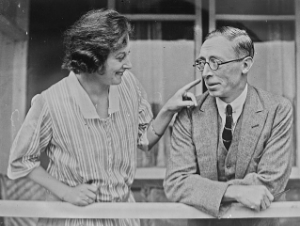 Henry then starred in "Our Lizzie", as part of the 1923 Xmas Day radio schedule. This cranked up his popularity, as did the introduction of his wife Blossom into his act. In 1925, they were Britain’s first husband & wife comedy team (left), establishing their "An Hour In A Restaurant" (left) as the forerunner to all domestic sitcoms.
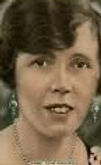 12th April 1926 was to be another landmark in BBC radio comedy: a six-part series was aired. "That Girl" starred Mabel Constanduros (right), a comedienne who went on to perform for another twenty years despite the show being dropped after one series. Her star vehicle was the character Mrs Buggins, loved not only by the public but also by Lord Reith. This may explain Constanduros’ status as the first comic to be paid the handsome sum of five guineas a show by the BBC.
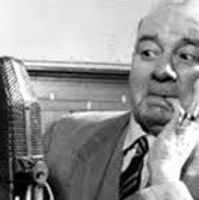 By the late twenties, Lord Reith could no longer ignore the audience in their demands for more radio comedy. Regular variety comics - Willie Rouse, Teddy Brown, Wish Wynne and the unique Robb Wilton (left) - began adapting their routines to fit the medium and secured a steady stream of work from the BBC.
A card was handed to all comedians before recording their first broadcast. This read “No gags on Scotsmen, Welshmen, Clergymen, Drink or Medical matters. Do not sneeze into the microphone!’ What might they have made of Frankie Boyle?...
In 1933 the inevitable happened and Lord Reith created a separate Variety department. It was headed by ex-Radio Times editor, Eric Maschwitz, who had enjoyed huge success the previous year as the producer of "Good-night Vienna". This was one of the first radio shows to transfer to film, a medium for which it may not have been suited. A story goes that when Maschwitz passed a cinema showing the film and asked the Commissionaire how it was being received, he was given the pithy reply: “About as well as Good-night Lewisham would do in Vienna”.
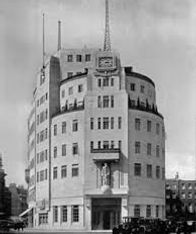 By the mid-1930s the BBC was broadcasting over two hundred comedy programmes a year, but mainly as live relays from variety theatres and music halls. “The Beeb”, now transmitting from new studios at Broadcasting House, Portland Place, (right) had other radio broadcasters to contend with. Foreign stations, such as Radio Normandy and Radio Luxembourg were airing English-speaking comedy shows including "Myrtle And Bertie, At Home With The Halberts" and "A Question Of Taste".