
The Age of Variety
The music hall circuit led to what became known as variety. Where music hall incorporated several different spots per night for each artist, variety reduced their appearances to a single spot. In the early 1930s, there were so many theatres to play, an act could be contracted for a different show every night for two years before completing the venue cycle. Morecambe & Wise famously used the same thirteen minutes of material in the first ten years of their career on the variety circuit.
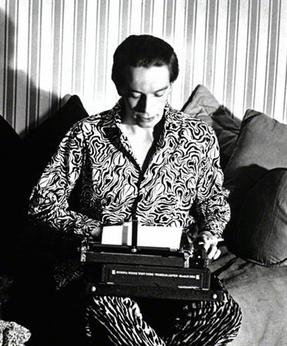 From 1737 to 1968, the censorship rules of The Lord Chamberlain's Office required all scripts for public performance to be submitted for official scrutiny. Texts were read and returned with any unacceptable routines and jokes underlined in blue pencil (from which the term "blue" comedy arises). The comedian could not then deviate from the act in its edited form, and some would risk a heavy fine for contravention (see Frank Randall). So, what happened in 1968? A battle between The Royal Court Theatre, the critic Kenneth Tynan (right) and the censorship office led to a public outcry and a change in the law. Je suis Kennie.
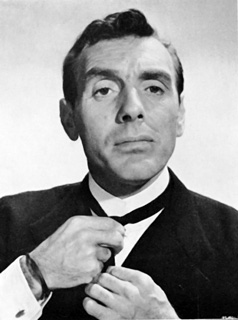 Variety was not the only way to get into the world of comedy. During the second world war, many members of the British Armed Forces performed as part of ENSA (Entertainments National Service Association). Following demob, those bitten by the showbiz bug moved into professional entertainment: Eric Sykes (left), Peter Sellers and Tommy Cooper were among those whose careers began on MOD stages.
The rise of the post-war comedian coincided with the increasing influence of television and radio on the lives of the British public. This also impacted on the variety circuit, whose live offering suffered from the growth of home entertainment. Mass media demanded a constant flow of new material and a touring comedian’s short, well-honed set was no longer viable.