
Satire & Clubland
By the mid-1950s, British attitudes towards comedy were changing. Well-known catchphrases, patter and punchlines sounded tired and old-hat. American audiences were already being introduced to a new breed of comedian (see the anarchic Mort Sahl) who typified a more contemporary and realistic view of life. Many English universities of the time had drama clubs which, to stretch their performing styles began to explore sketch comedy and improvisation. From these experiments, the concept of a revue show was born, and soon student societies like The Cambridge Footlights, The Oxford Revue Group and Bristol Revunions were regularly performing at The Edinburgh Fringe.
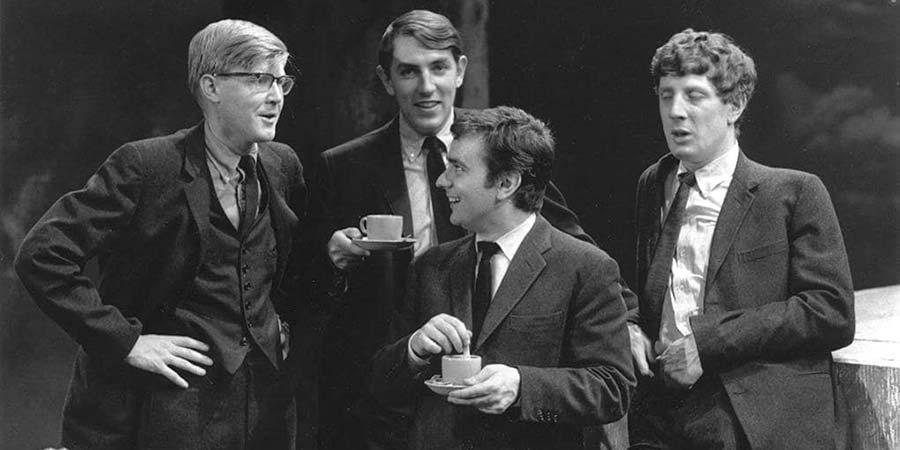 In the vanguard of this movement were the combined talents of Oxford undergraduates Alan Bennett and Dudley Moore, and Cambridge students, Jonathan Miller and Peter Cook. The four were brought together in 1960 by Robert Ponsonby in the final year of his artistic directorship of The Edinburgh International Festival. Recognising the success of the fringe revue format, Ponsonby assembled a version for the main festival. Beyond The Fringe was a hit, transferring to both the West End and Broadway. The show wasn’t without controversy: the very idea of mocking the British prime-minister, Harold MacMillan, was considered outrageous at the time, but the script secured censorship approval and presaged the satire boom of the 1960s.
 Satire was a more complex device than its comedic forerunners. Its middle-class authorship and use of historic references and flowery vocabulary were sometimes in danger of alienating a working-class audience. However, by the 1970s, these patrons were benefitting from the emergence of a quite different comedy circuit, which included Working Mens’ Clubs. Some of the more successful comedians of the day cut their teeth in these clubs - Bernard Manning, Bobby Thompson (left), Mike Yarwoodand Ken Goodwin – and eventually made their way to television via such shows as The Wheeltappers and Shunters Social Club, The Comedians and Jokers Wild.
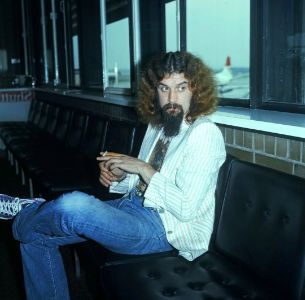 The late 1970s saw the evolution of "new-wave" comedy. Some of its earliest successes came from folk clubs: although acts such as Billy Connolly (left), Mike Harding and Jasper Carrott performed as musicians, their between-song banter developed into complete comedy routines. Mike Harding (“The Rochdale Cowboy”) secured two series of stand-up on BBC2 (1979-82) – his beautifully-crafted monologues stood out in a period when most TV comics were still peddling pub jokes.