Can you hear me mother?
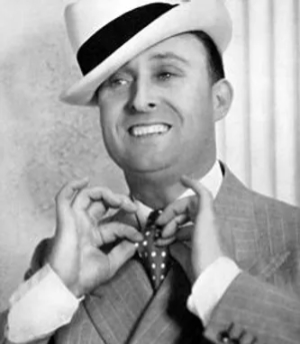 The dawning of sound was to change everything and comedy in particular. Established patter comics who had been performing on the variety circuit for years could now get involved. Acts like Arthur Lucan & Kitty McShane, Max Miller (right), George Formby (left), Gracie
  Fields, and The Crazy Gang were to become hugely successful in film. Their fun, knockabout films were typical of the 1930s, an era in which stage farces such as Ben Travers’ A Cuckoo In The Nest (1933) were also being remade for cinema audiences.
With the outbreak of war in 1939, politics began trickling into comedy films. Comics were making social commentaries, combining wartime scenarios with satire and slapstick. Arthur Askey’s Band Waggon (1940), George Formby’s Heil To Hitler (1940), The Crazy Gang’s Gasbags (1941) and Will Hay’s The Goose Steps Out (1942) used comedy as their propagandist weapon: Nazis were portrayed not as evil tyrants but as buffoons. It’s interesting to note, Formby was such a global crowd-winner during WWII that he was decorated with The Order of Lenin, the only comic ever to have received this award.
Producers found it easy to take a live comedian and give them free rein in front of the camera, and many acts were simply transferred wholesale to screen, but the resulting films could not attract the kind of sophisticated audiences known to grace West End theatres in London. Frank Lauder and Sidney Gilliat were to change that with their well-crafted scripts presenting a blend of social and class problems as barbed satire. Their blueprint was to be used in many British comedies of the time, none more so than the early Ealing comedies of the 1940s.
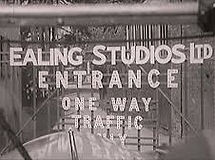 The leads were not comedians, however: studios opted instead for first-class character actors like Alistair Sim, John Mills, Margaret Rutherford and Alec Guinness. The subtle, underplayed comedy that followed was a breath of fresh air compared to the previous era’s physical, over-the-top antics. Classics such as Whisky Galore! (1949), Passport to Pimlico (1949), Kind Hearts and Coronets (1949), The Lavender Hill Mob (1951) and The Lady Killers (1955) have stood the test of time, some even being remade with the big names of today’s comedy world.
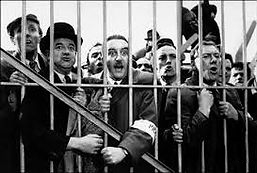 The twin Boulting brothers, Roy and John, began their film-making careers during wartime, but started lampooning in earnest by producing, writing and directing such films as I’m All Right Jack (1959 - right), Carlton-Browne of the F.O. (1959) and Heavens Above! (1963). Their sending-up of great British institutions helped to established their kudos in populist film.
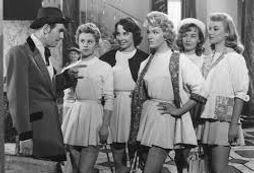 During the same decade, Lauder and Gilliat created their trademark movie using a story set within a school of tearaway teenage girls. Blue Murder at St Trinian’s (1957 - left) starring Terry Thomas, George Cole, Joyce Grenfell, and as the headmistress, Alistair Sim, became such a hit, four others were made in the original series.