
After Grimaldi
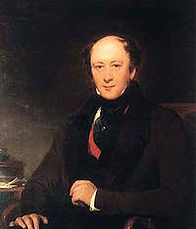 After the era of Grimaldi, Pantomime was unchanged for some time: this was basically John Rich’s Commedia format featuring the Harlequin and Pantaloon characters, with each Pantomime remaining part of a multi-act bill. In 1840, Queen Victoria’s marriage brought about a renaissance in middle and upper-class family life. A prestigious children’s festival (to which Charles Dickens was a patron) sought writers to create imaginative productions complete with handsome princes, demons and magical godmothers. The playwright James Planché (right) brought his puns and word play to these fairy tales, perfect for family entertainment.
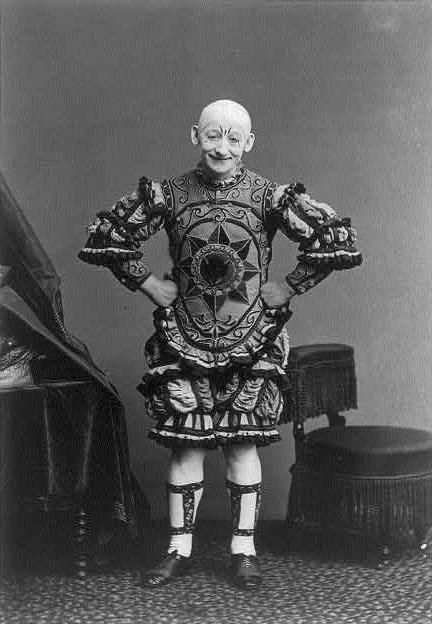 Within twenty-five years, pantomime had become an established item in the British theatre calendar. An English clown, Charles Parsloe, travelled to America in 1831 in the hope of introducing US audiences to pantomime. His Mother Goose opened at the Bowery Theatre, New York, on Boxing Day of that year to a very unenthusiastic response, and the genre failed to take off.
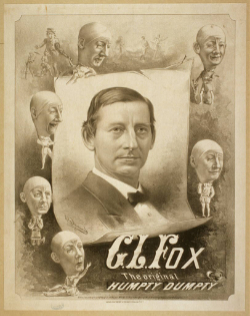 It did, however, have a brief revival in 1868 when George L. Fox (left), a renowned American clown, produced and performed in Humpty Dumpty. This was the first two-act, standalone pantomime, still cited as an unsurpassed production. The show was successful enough to run until 1877 but was curtailed when a stage injury caused Fox’s death.