Pantomime Supremacy
 In 1910, two new venues vied for pantomime supremacy - The London Palladium and The Empire Theatre, Dewsbury.
With its 3,435 seats (newly-designed by the masterful Frank Matcham) The Palladium was a uniquely large, grand theatre, though its seating arrangement still allowed for a sense of intimacy between performers and audience. It became the number one Variety room and saw pantomime flourish within its walls from the start of WWI (see Wilkie Bard). The Palladium stage was perfect for exciting, pioneering sets: the flying rig was so popular that Peter Pan became a pantomime fixture every year between 1930 and 1938.
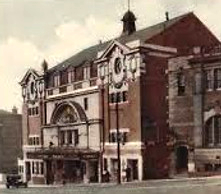 The Empire Theatre (right) opened as a Variety venue in 1909 with just over 2,000 seats, filled by audiences who came from as far away as Manchester and York every Christmas. The pantomime season was much longer than that of today, running from 24thDecember to Easter, guaranteeing performers three to four months’ work. As an independent theatre, it had no governing board with a remit to manage a chain of venues in which cost-efficiencies often led to low performer wages. In contrast, The Empire could afford to bring in the biggest names from the Music Hall and Variety circuit: Robb Wilton (right) opened their first pantomime.
The main components of today’s panto were all present by the end of WWII: a fairy tale story featuring a goody, a baddy, a dame and a dunce. But by the late 1980s pantomime was no longer fashionable, and the demise of audiences caused West End theatres to fill their auditoria with other seasonal productions for several decades. Panto is now back with a vengeance: big costumes, big sets and big names bring the whole family out to the theatre at Christmas. These hilarious, high-spirited and sparkling events - often a child’s first introduction to theatre - are once again an established calendar event in Britain, forming an essential part of our traditional season of goodwill. Thank you, Joseph Grimaldi.