
England - a new era
The Theatre Royal that Charles had built (on the site of Oliver Cromwell’s favourite tennis courts) burned down in 1669 but a new, larger theatre - The Theatre Royal Drury Lane - took its place in 1674.
 One of the theatre’s first managers was a penny-pinching lawyer called Christopher Rich, known to have no love of the arts. Conversely, his son John Rich (left), wanted to act but had no talent and was ridiculed by the King’s Players who claimed “He is simply illiterate and cannot read a script”; “He has a voice that would make the top circle jump”. The Richs left to open their own venue, The Lincoln's Inn Fields Theatre near Holborn.
Its location - a mere six hundred yards from the hubbub of Covent Garden - made it difficult to attract audiences, despite John Rich staging the most popular shows of the time. Rich recalled the attention which The Maid’s Tragedy had drawn at The Theatre Royal, and decided to produce a piece with similar Commedia roots: A New Italian Mimic Scene Between A Scaramouche, A Harlequin, A Country Farmer, His Wife And Others. The show was launched on 26 December and received rave reviews, including some for Rich (right) himself (under the name John Lunn) in the Harlequin role.
Rich then took a gamble on a musical show that ridiculed Italian Opera. Passed over by other producers, John Gay’s The Beggar’s Opera (left) opened at the Lincoln Inn’s Field Theatre on 29 January 1728. The show was a resounding success and is often quoted as having ‘made Gay rich and Rich gay’. It built sufficient funds - after just sixty-two performances - for John Rich to build a new theatre, The Theatre Royal, Covent Garden, built on the site of what is now The Royal Opera House.
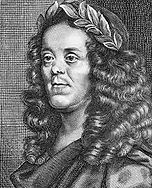 To gain royal endorsement, John Rich coaxed actor, Poet Laureate and once good friend of Charles II, William Davenant (right), to be the figurehead of the new company. This in turn helped form an intense rivalry between the Theatre Royal Drury Lane and The Theatre Royal Covent Garden. Both theatres fought for the new King's, George II, attention: the competition became so fierce that on a few occasions the venues concurrently presented the same new piece by a popular playwright. To come out on top, Rich needed to source another hit.
With unique stage machinery, and a wardrobe of fantastic costumes at his disposal, Rich turned again to Commedia or the ‘Italian manner’ as it was now being called. He brought in live animals to create spectacle, magicians to create stage illusions, and the best contemporary writers to bring Harlequin, Columbine, Pantaloon, Punch and Pierrot to life. Rich saw other theatres move to copy his pantomime productions, but none could match him for sheer theatricality and originality.
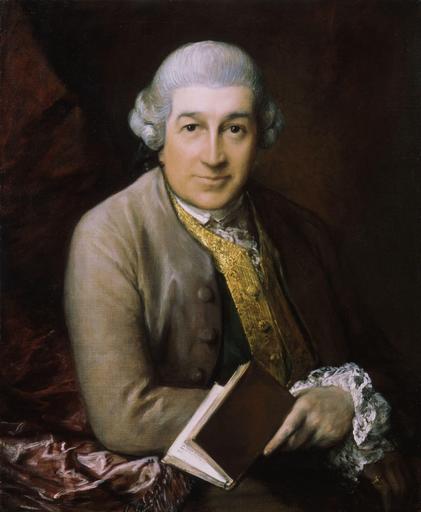 Now that Covent Garden had finally eclipsed Drury Lane, artistes were desperate to perform for Rich: the French ballerina Marie Sallé premiered Pygmalion in 1734 and in the same year George Frederic Handel presented a full season of opera. When the great David Garrick (left) performed in the 1745 seasonal pantomime, Rich was heavily condemned for involving the finest of English actors in low theatre, an act perceived as cultural debasement. Soon after, Garrick joined Drury Lane and Rich was devastated.
By the time John Rich died in 1761, his customary seasonal show had become a staple for audiences: a Christmas spectacle now widely known as pantomime. Garrick himself was managing Drury Lane, and recognised that one month of pantomime revenue could sustain the theatre for the next eleven. He had found a new Harlequin to fill Rich’s shoes, Giuseppe Grimaldi, fresh from working the Italian and French festés, who was to play almost every pantomime character at Drury Lane over the following thirty years.